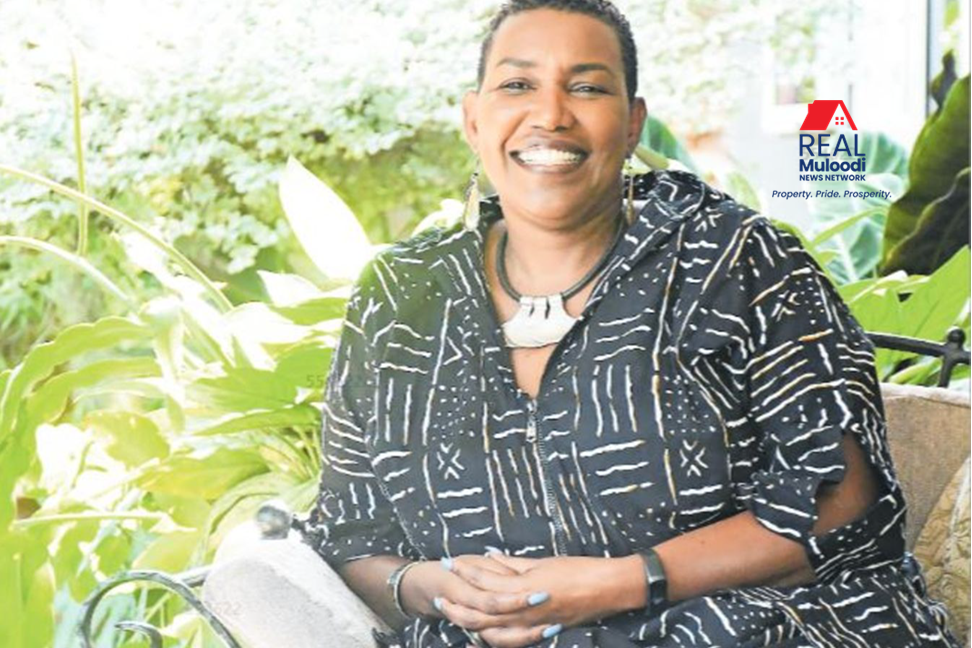
UGANDA, Kampala | Real Muloodi News | In the evolving world of Ugandan real estate, where concrete blocks increasingly rise toward the sky and modern villas compete for attention, one designer has chosen a different path—one that leads back to the land itself. Natasha Rubadiri, an architect and design visionary, is quietly reshaping the country’s understanding of what a home can be.
Rather than echoing imported blueprints or global trends, Rubadiri has emerged as one of the few designers championing spaces that are unmistakably Ugandan—homes grounded in local materials, cultural memory, natural textures, and the landscapes that define this part of the world. Her approach is not nostalgia. It is a bold reimagining of home design, one that challenges the industry’s tendencies toward imitation.
“Uganda gives us everything,” she says. “The materials, the colour palette, the climate, the stories. We just need the courage to build with our own identity.”
Her philosophy has gained traction as property owners seek homes that go beyond mere shelter. Increasingly, Ugandans want spaces that reflect who they are, where they come from, and how they wish to live. For Rubadiri, designing a home is as much about emotional architecture as physical structure. She wants houses to breathe, adapt, and welcome their occupants in a way that feels both intimate and timeless.
In recent years, Rubadiri has worked on a series of residential properties—ranging from lakeside cottages in Entebbe to hillside homes in Fort Portal—that have become reference points in modern Ugandan design. Her hallmarks are clear: open-air verandas that frame natural views, textured walls made from local stone and clay, hand-crafted interior features created by Ugandan artisans, and natural ventilation that responds to the country’s unique climate.
One homeowner in Entebbe describes the feeling of stepping into a space Rubadiri designed. “The house doesn’t feel built,” he says. “It feels grown. The colours, the air, the light—it all blends with the environment. You don’t look outside for nature; nature follows you inside.”
Such homes distinguish themselves in a market often dominated by glass facades and imported finishes. While these international styles remain popular, Rubadiri’s work has shown that authenticity can be a luxury of its own. Her designs often reduce long-term cooling costs by maximizing natural airflow, while her use of local materials helps lower construction expenses and extends the lifespan of the property.
But her influence extends beyond individual houses. Rubadiri is increasingly working with property developers who want differentiation in a competitive market. Modern gated estates, boutique lodges, and eco-residential communities have sought her insight to incorporate cultural and environmental elements that appeal to both Ugandan and international buyers. The result is a new aesthetic movement—one that merges sophistication with rootedness.
“People want homes that feel real,” she says. “Not replicas of places they’ve never been. A house should tell the story of its land.”
Her reverence for the environment also shapes her real estate perspective. She designs with the terrain rather than against it, preferring to preserve existing trees, rock formations, and slopes rather than flatten them. This approach challenges traditional development models but resonates with buyers who value sustainability and natural beauty as key components of property value.
There are challenges, however. The construction industry still leans heavily toward imported materials, and many clients initially equate foreign designs with prestige. Rubadiri often must show them the long-term economic and aesthetic advantages of locally informed architecture.
“Identity isn’t something you buy,” she explains. “It’s something you build.”
Her dedication to mentorship is influencing the next generation of architects and interior designers. She urges them to step into the field with curiosity about their environment and cultural origins. She reminds them that Uganda’s real estate sector is hungry for innovation that feels authentic, not imitative.
“Your work should speak for the land you stand on,” she tells young designers. “Otherwise, it becomes noise.”
As Uganda’s property market expands—both in urban and rural settings—Rubadiri’s voice is becoming increasingly vital. Her designs offer an alternative vision of progress, one where development does not erase heritage but elevates it.
In the end, her work is not just about houses. It is about belonging. About creating spaces that hold the warmth of Ugandan culture, the resilience of its materials, and the serenity of its landscapes. Her designs are a reminder that in the rush to build upward and outward, there is profound value in building inward—into the textures, memories, and traditions that make a place home.
For Uganda’s real estate sector, Rubadiri’s vision provides a blueprint not just for beautiful homes, but for an architectural identity that is proudly, confidently Ugandan.
READ MORE LIKE THIS:
Why a Ugandan Nurse Abroad Chose to Renovate Her Old House Instead of Building
Ali Kimuli Builds a Four-Bedroom House in Record Four Months