UGANDA, Kampala | Real Muloodi News | Transforming a standard 100-by-100 plot of land into a hospitality hub is gaining traction among property investors and small business owners seeking to generate consistent revenue from prime real estate, industry sources say.
A well-designed hospitality hub can accommodate multiple accommodation units, shared amenities, and services that attract both short-term and long-term guests if planned and executed with strategic design and market considerations.
A hospitality hub is defined in this context as a mixed-use accommodation centre that may include self-contained suites, shared facilities, and guest-oriented services. On a 100×100 plot, the hospitality hub concept maximizes every square metre to create a diversified income stream and meet evolving traveller preferences in Uganda’s tourism and urban markets.
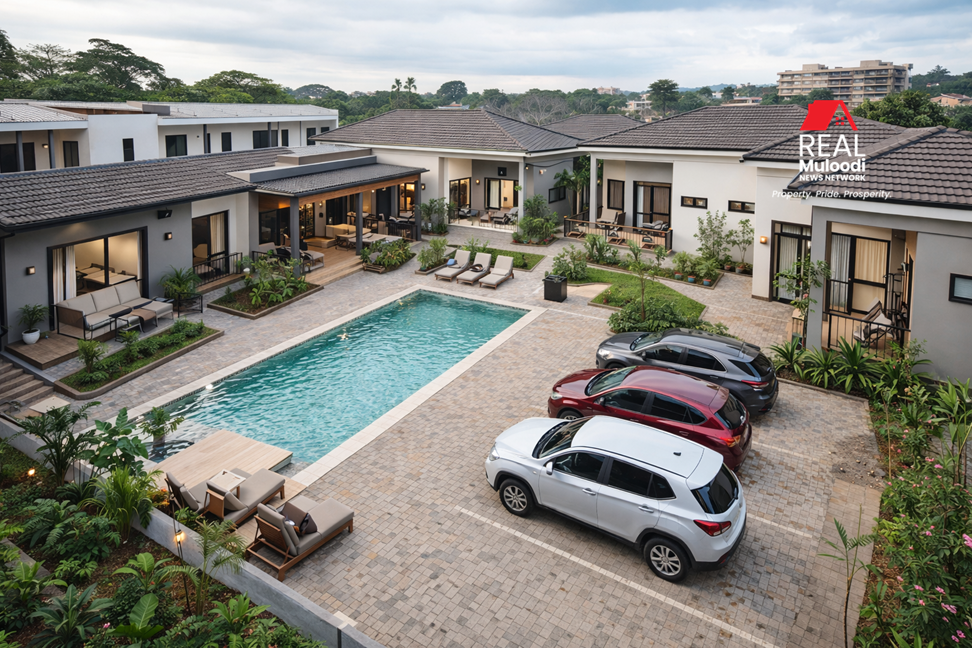
Architectural layouts for a hospitality hub on such a plot typically feature an organized arrangement that balances privacy, community space and circulation. One model places units in an L-shape or hollow square around a central courtyard, providing natural light, ventilation and a shared outdoor space for guests. These layouts also support guest movement and internal operational efficiency.
Industry experts say a mixed unit strategy is essential to a successful hospitality hub. For example, placing four larger suites of about 65–75 square metres alongside four smaller units of about 45–55 square metres caters to different market segments — from family travel to solo or business stays. Larger suites often include multiple bedrooms and full kitchens, while smaller units present comfortable living areas and kitchenettes.
Revenue projections for a hospitality hub rely on a combination of factors: unit pricing, occupancy rates, and service offerings. Financial assessments indicate that at full occupancy, larger units in a hospitality hub might generate between Shs250,000 and Shs350,000 per night, while smaller suites could command Shs100,000 to Shs180,000 per night. These figures translate into daily and monthly revenue streams that contribute to covering operating costs and capital recovery.
Supporting facilities are often included in a hospitality hub design. Many investors incorporate dedicated wellness features such as gyms, saunas or spa treatment rooms as a value-added differentiator. Industry consultants state that such amenities have transitioned from optional extras to baseline expectations for travellers who prioritize comfort and leisure.
Site planning for a hospitality hub also integrates essential infrastructure like parking, drainage, and landscape design. Plans for accommodating five to eight vehicles within permeable paving systems help manage runoff while ensuring guest convenience. By aligning guest access, parking and reception functions, a hospitality hub can enhance user experience and operational flow.
Building tier options are often established to match investor budgets and expected returns. Lower-cost finishing tiers can use local high-quality materials such as ceramic tiles and solid wood furniture, while higher-end finishes might include engineered hardwood floors, quartz countertops and modern audiovisual systems. These choices influence the overall appeal and pricing of a hospitality hub offering.
Legal and regulatory considerations are part of launching a hospitality hub. Property owners should verify zoning or land-use permissions before construction, and hospitality businesses often require business licences and compliance with local tourism standards. Understanding and adhering to relevant regulations supports long-term operation and guest safety.
Financial modelling for a hospitality hub on a 100×100 plot must also account for market realities such as occupancy trends, competitive pricing, and guest experience. Tools like online booking platforms and dynamic pricing systems can support efficient reservation management and revenue optimization.
Beyond physical structures, marketing plays a role in establishing a hospitality hub’s presence. Online visibility through booking sites and search engines, effective signage, and reviews from early guests help position the hub in a competitive landscape that includes hotels, guesthouses and alternative accommodation options.
A hospitality hub on a 100×100 plot can generate diversified revenue when carefully designed, properly regulated, and effectively marketed. Investors and developers who align unit mix, amenity offerings, and legal compliance can create a commercial asset that meets the needs of today’s local and international travellers.
READ MORE LIKE THIS:
Ugandan Diaspora in Real Estate Drives Growth in Property Market
Hostel Investment Opportunities Drive Growth in Uganda’s Real Estate Sector