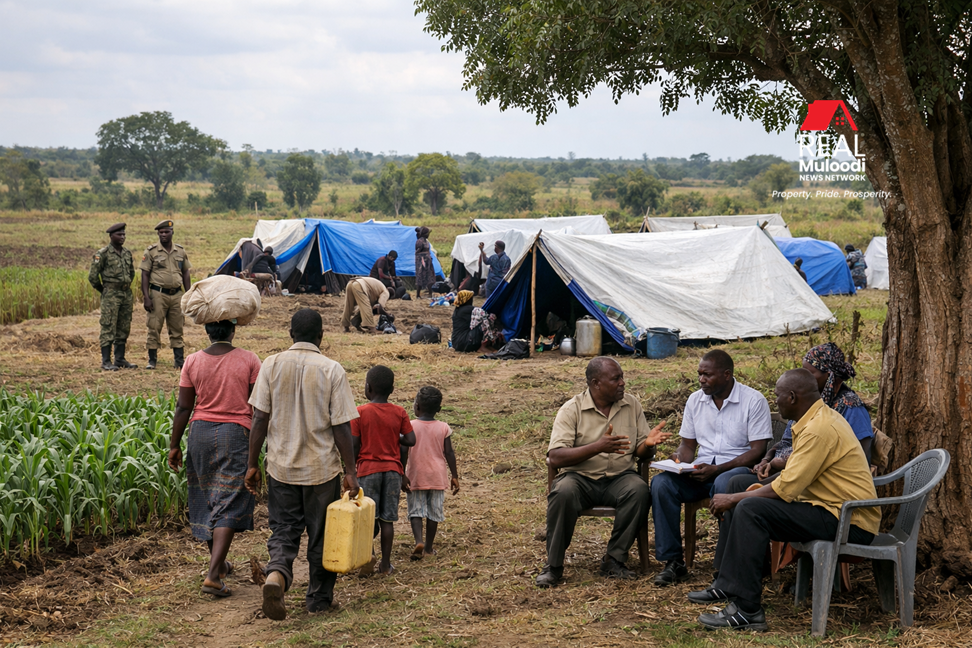
UGANDA, Ssembabule | Real Muloodi News | Three years after their eviction, dozens of residents in Ntyazo Parish have returned to contested land in Lwemiyaga County, reigniting the long-running Ssembabule land dispute and raising fresh concerns over security and ownership rights.
The group, previously displaced during a 2023 eviction, began resettling this week, erecting temporary shelters and clearing portions of land for cultivation. Their return has heightened tension between them and individuals claiming legal ownership of the property.
Several of the returning residents said they had exhausted all alternatives since their removal and decided to reclaim what they describe as ancestral land. “We have nowhere else to go. This is the land of our forefathers,” one resident said during a community gathering at the site.
The disputed land in Ntyazo has been at the center of competing claims involving customary occupants and individuals holding registered land titles. At issue are allegations of irregular titling, historical settlement patterns and questions over lawful occupancy.
Local leaders confirmed the renewed standoff and appealed for calm. A district official said authorities were monitoring the situation closely to prevent violence. “We are engaging all parties to ensure that the matter is handled peacefully and within the law,” the official said.
Security personnel have since been deployed to the area as a precautionary measure. By press time, no major confrontations had been reported, although residents described the atmosphere as tense.
The Ssembabule land dispute reflects broader land management challenges across Uganda, where customary tenure systems often overlap with freehold and leasehold titles. In many rural districts, rapid population growth and rising land values have intensified ownership conflicts.
Community elders in Ntyazo say the disagreement has fractured relationships among families who previously coexisted peacefully. Some accuse private claimants of acquiring titles without adequate consultation. Title holders, however, maintain that they followed established legal procedures in securing documentation.
Legal experts note that resolution of land disputes typically requires verification of land records, boundary demarcation and, where necessary, judicial determination. Mediation through district land boards or courts is often recommended to prevent escalation.
A local council leader emphasized the importance of dialogue. “We urge both sides to respect the law and allow due process to take its course. Violence will not solve this,” he said.
For the returning families, rebuilding has already begun. Makeshift tarpaulin shelters dot sections of the contested property, and small gardens are being replanted as households attempt to restore normalcy amid uncertainty.
District authorities indicated that further consultations are expected in the coming days to explore mediation options. Observers say transparent documentation and structured dialogue will be critical in resolving the Ssembabule land dispute sustainably.
As the situation develops, residents remain watchful, hoping for a peaceful settlement that clarifies ownership while safeguarding community stability.
READ MORE LIKE THIS:
Govt to Launch Comprehensive Digital Land Registry to Secure State Property