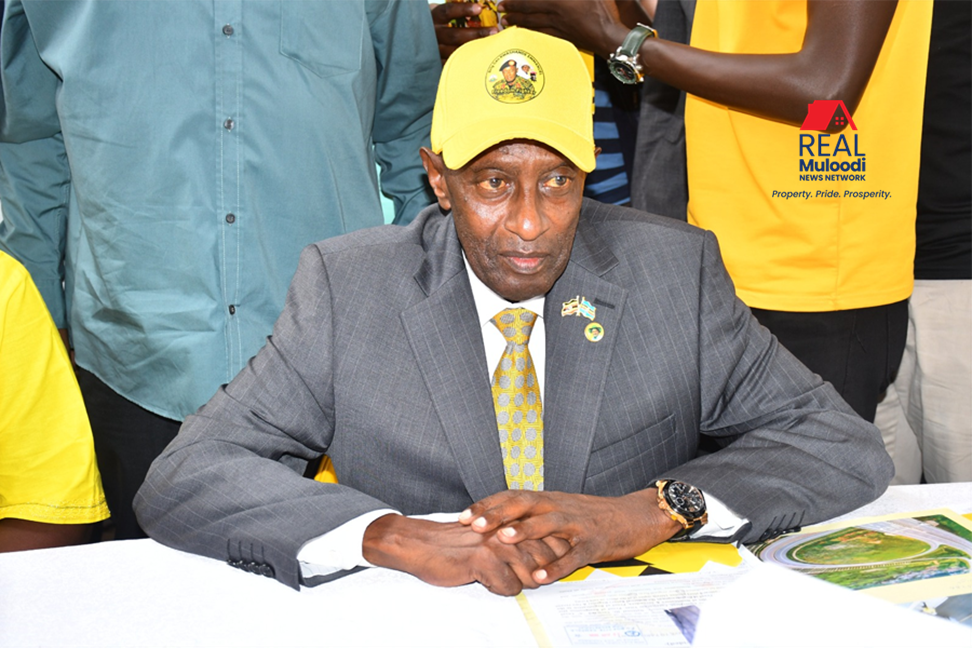
UGANDA, Kampala | Real Muloodi News | Retired Brigadier-General MP-elect Emmanuel Rwashande has warned moneylenders against land seizures, saying the practice violates the law and threatens family livelihoods across rural Uganda.
Rwashande said land seizures have increased in recent years, leaving families displaced and fueling disputes in farming communities where land remains the primary source of income and security.
Rwashande made the remarks while addressing residents during a thanksgiving ceremony in Lwemiyaga Constituency following his recent parliamentary victory. He said complaints related to land seizures had become common during his consultations with residents, particularly involving unpaid loans secured through informal agreements.
He emphasized that land ownership in many households is communal and cannot be lawfully confiscated by lenders without following due legal process.
“Land belongs to the entire family — the husband, wife and children,” Rwashande said. “You may recover other property, but land should not be taken in that manner. Moneylenders seizing land is illegal and must stop.”
According to Rwashande, some moneylenders allegedly exploit borrowers’ financial distress and limited legal awareness to claim land titles or forcibly take possession of family land. He said such actions often occur without court orders, consent from all registered owners or involvement of relevant authorities.
Local leaders attending the event said that the issue has contributed to rising land-related conflicts, particularly in agrarian areas where families rely on inherited land for subsistence farming. Several residents told the gathering that land confiscations linked to loan defaults have led to homelessness, school dropouts and family breakdowns.
Rwashande said he plans to work with local government officials, law enforcement agencies and community leaders to address reported cases of land seizures by moneylenders. He noted that the law provides clear procedures for debt recovery and does not permit unilateral confiscation of land by private lenders.
“Any recovery of property must follow the law,” he said. “What we are seeing in many villages are alleged abuses that deny families their rights and dignity. These seizures undermine social stability.”
He urged residents to seek legal guidance before using land as collateral and encouraged authorities to strengthen enforcement against illegal lending practices. Rwashande also called on district leaders to sensitize communities about lawful borrowing and debt recovery mechanisms.
While Uganda has existing laws governing land ownership and debt recovery, enforcement remains uneven, particularly in rural areas where informal lending is widespread. Analysts say the persistence of moneylenders seizing land reflects gaps in access to affordable credit and legal services.
Rwashande said addressing those gaps would be among his priorities in Parliament. “Protecting family land is protecting livelihoods,” he said. “We must ensure that the issue is addressed within the framework of the law.”
He concluded by urging residents to report alleged illegal land confiscations to authorities, saying accountability is key to curbing the practice and safeguarding land rights.
READ MORE LIKE THIS:
Borrowers Shown How to Beat Money Lenders who Hide to Take Mortgaged Property