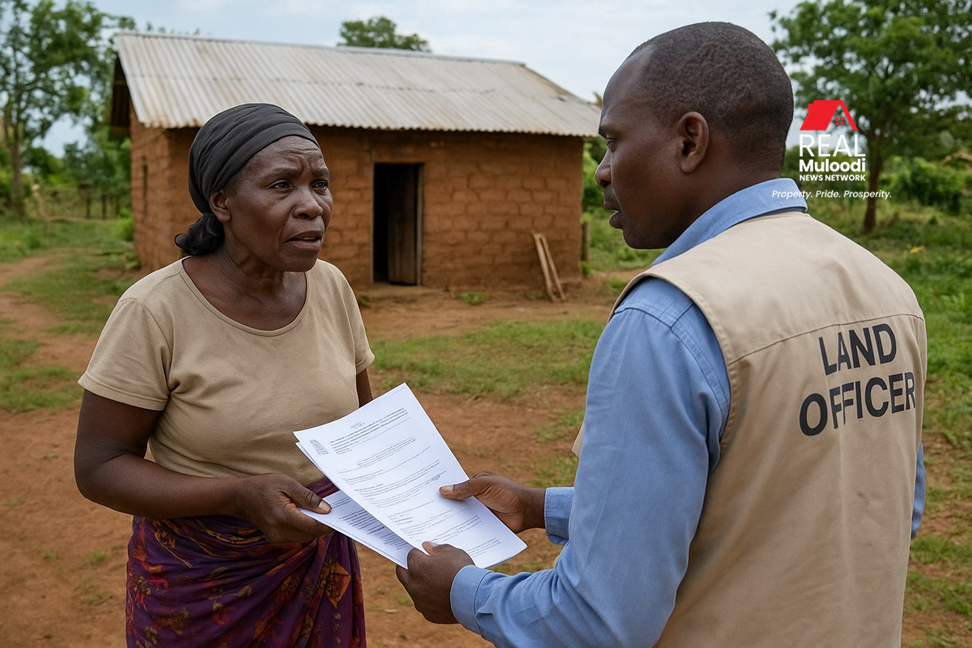
UGANDA, Kampala | Real Muloodi News | More than three decades after land reforms in Uganda were introduced to resolve ownership disputes and strengthen tenure security, conflicts over land remain widespread. Despite the 1995 Constitution and the 1998 Land Act—key pillars of the reform agenda—weak enforcement, corruption, and overlapping land systems continue to undermine progress.
When the 1998 Land Act was enacted, it was celebrated as a major step toward justice for millions of landholders. The law recognized four tenure systems—customary, freehold, mailo, and leasehold—and sought to safeguard occupants, especially tenants on registered land.
However, the coexistence of customary and statutory systems, coupled with limited institutional capacity, has made the outcomes of land reforms in Uganda inconsistent across regions.
Experts say the persistence of land disputes stems from poor coordination among government institutions, such as the Ministry of Lands, district land boards, and local courts.
In many rural areas, residents lack access to legal aid, while weak record-keeping leaves them vulnerable to eviction or fraud. Some district offices still operate without surveying equipment or trained staff, leading to boundary overlaps and forged titles.
The story of Kevin Ajibo, a widowed woman from Kaberamaido District, demonstrates how the shortcomings of land reforms in Uganda affect individuals. After her husband’s death, Ajibo’s in-laws forcefully evicted her, claiming ownership of the family property.
With assistance from legal aid organizations, she petitioned the Soroti High Court, which ruled in her favor. Yet even after the court victory, she continues to face threats of renewed eviction.
Across Uganda, similar incidents continue to surface. In Kibaale, Amuru, and Mubende districts, entire communities report evictions by landlords, investors, or government projects. Disputes over compensation, survey boundaries, and illegal land transfers remain common, revealing the limits of land reforms in Uganda to fully protect vulnerable occupants.
Analysts note that the slow rollout of the National Land Information System (NLIS) and delays in decentralizing land registries have compounded the problem. Without digitized records, fraudulent titles still circulate, eroding public trust in land administration.
Meanwhile, population growth and urban expansion have increased pressure on land, especially since about 70 percent of Uganda’s land remains under customary tenure—largely undocumented and open to exploitation.
Government initiatives such as the Land Fund and zonal land offices were intended to promote equitable redistribution and streamline registration. Yet insufficient funding and administrative bottlenecks have limited their effectiveness.
Three decades after their introduction, land reforms in Uganda remain far from complete. While the legal framework exists, lasting solutions depend on strong enforcement, wider public awareness, and accessible justice for those most at risk of displacement.
READ MORE LIKE THIS: