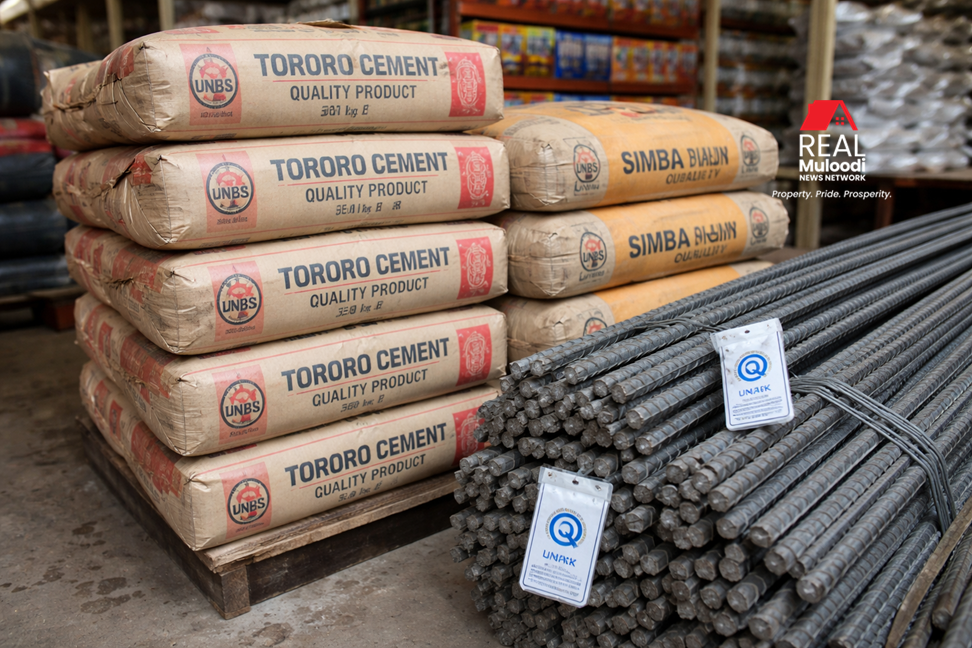
UGANDA, Kampala | Real Muloodi News | The spread of fake building materials across Uganda’s construction sector has raised concern among regulators, engineers and builders, with officials warning that counterfeit cement, steel bars, bricks and electrical products are increasingly finding their way onto the market.
Authorities say the materials, often sold at lower prices, pose financial risks to buyers and may compromise structural integrity when used in construction.
The Uganda National Bureau of Standards has repeatedly cautioned that fake building materials are commonly repackaged to resemble certified products, making them difficult for ordinary buyers to identify. According to the bureau, some counterfeiters imitate official markings and labels to mislead consumers into believing the products meet national quality standards.
Sylvia Kirabo, a spokesperson for UNBS, said counterfeit construction inputs continue to undermine consumer safety and legitimate businesses.
“These products are sold outside the regulatory system, and many do not meet the required safety and quality standards,” Kirabo said. “Buyers are advised to verify certification marks and purchase materials from authorized dealers.”
Engineers say the use of fake building materials often begins when buyers bypass professional guidance in an attempt to reduce costs. Claude Ziraba, a Kampala-based civil engineer, said clients sometimes disregard technical recommendations.
“Some clients believe professionals inflate prices, so they choose materials on their own,” Ziraba said. “That is where counterfeit suppliers take advantage.”
UNBS advises buyers to check for the official Q-mark on products such as cement, steel bars, electrical wires and paints, noting that certified manufacturers are required to display traceable identification details on packaging.
Cement bags, for example, should clearly indicate the manufacturer, batch number, grade and standard weight. Bags that appear underweight, poorly sealed or inconsistently branded may indicate counterfeit products.
Builders are also encouraged to conduct basic physical checks before purchase. According to industry guidance, steel bars that bend or crack under minimal force may be substandard, while poorly fired bricks may dissolve or discolor water when soaked. Electrical wires lacking clear labeling or insulation standards may also fall below required specifications.
Law enforcement agencies have, in previous operations, seized consignments of cement and other materials alleged to be counterfeit in several districts. In such cases, police said investigations were ongoing to establish authenticity through laboratory testing, with suspects arrested pending further inquiries.
Jimmy Okello, a representative of the Uganda National Association of Builders, Suppliers and Engineering Contractors, said careful inspection remains critical.
“Buyers should physically examine materials and scrutinize labels for accuracy and consistency,” Okello said. “Any irregularities should raise concern.”
Regulators say contractual safeguards can also reduce exposure to fake building materials, advising developers to include quality specifications and compliance clauses when sourcing supplies. UNBS continues to conduct market surveillance and public awareness campaigns aimed at reducing the circulation of counterfeit construction materials nationwide.
READ MORE LIKE THIS:
Building a Profitable Hospitality Hub on Small Land of 100×100