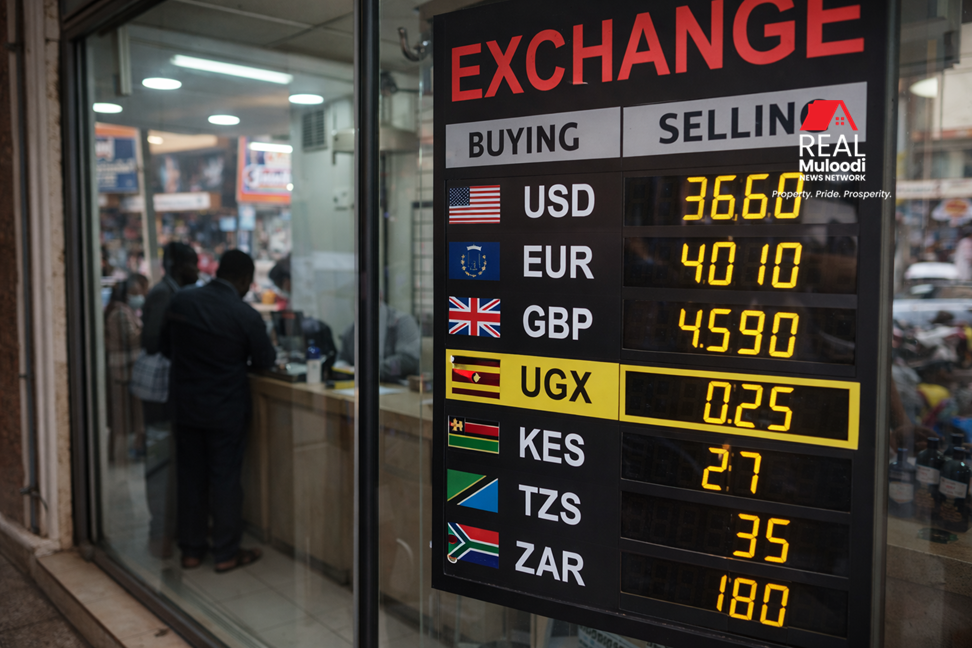
UGANDA, Kampala | Real Muloodi News | Uganda Shilling has emerged as the world’s most stable currency, outperforming major global units including the U.S. dollar, British pound and Hong Kong dollar, according to data presented by the Ministry of Finance during a third-quarter budget performance briefing.
The shilling appreciated by 2.45 percent in the year ending December 2025, a performance attributed to low inflation, disciplined fiscal management and targeted government interventions in key sectors of the economy. The update was delivered by Ramathan Ggoobi, Permanent Secretary and Secretary to the Treasury, during the briefing held in Kampala.
“Currently, the Uganda Shilling is the most stable currency in the world, followed by the UK pound sterling and the Hong Kong dollar,” Ggoobi said while outlining the government’s macroeconomic outlook.
Uganda’s currency performance stands out at a time when many emerging and developing economies continue to grapple with inflationary pressures, exchange rate volatility and global financial tightening. Several African currencies, including the Egyptian pound and South African rand, recorded significant depreciation against the dollar over the same period.
Ggoobi said Uganda’s economic growth remained robust, with gross domestic product expanding by 6.3 percent in the 2024/25 financial year. Growth for the current financial year is projected between 6.5 percent and 7 percent, supported by agriculture, services and industrial activity. The size of the economy is projected to reach $68.4 billion, equivalent to Shs249.4 trillion, in the 2025/26 financial year.
Inflation has remained subdued despite the ongoing election cycle, a period traditionally associated with higher consumer prices. Headline inflation stood at 3.1 percent in both November and December 2025. According to the Treasury, this stability reflects sustained investment in food production, consistent monetary policy actions by the Bank of Uganda, and fuel import arrangements managed through the Uganda National Oil Company, which reduced exposure to international price shocks.
Government expenditure controls also played a role in maintaining macroeconomic balance. Spending during the third quarter of the financial year was aligned with available resources while accommodating election-related costs, security requirements and ongoing investments in health, education, infrastructure and wealth creation programs.
The shilling’s performance has also been highlighted by institutional investors. Patrick Ayota, Managing Director of the National Social Security Fund, previously noted that the currency’s appreciation over the past five years reflected stable economic fundamentals and an open foreign exchange regime.
Speaking at the Uganda–UAE Business Forum, Ayota said the free-floating exchange rate and absence of capital controls continued to attract long-term investment inflows. He noted that investors were able to move funds in and out of the country without restriction, reinforcing confidence in Uganda’s financial system.
As global markets remain volatile, officials say Uganda’s exchange rate stability underscores the role of coordinated fiscal and monetary policy in supporting economic resilience.
READ MORE LIKE THIS:
UEDCL Moves to Stop Landlord Power Exploitation as Tenants Report Excess Charges
Marriott and Hilton Hotels Uganda Signal New Era in Hospitality Industry